
Universality of Truth
Now this is an article that is going to upset a lot of people but at the same time it will cause a lot of people to reflect on something that we so easily take for granted.
Anthropology is the study of humankind, past and present, that draws and builds upon knowledge from social and biological sciences, as well as the humanities and the natural sciences. In the United States anthropology is traditionally divided into the four field approach developed by Franz Boas in the early 20th century: biological or physical anthropology, social anthropology or cultural anthropology, archaeology and linguistic anthropology. Ethnography is one of its primary methods as well as the text that is generated from anthropological fieldwork.
Now this is an article that is going to upset a lot of people but at the same time it will cause a lot of people to reflect on something that we so easily take for granted.

When I arrived in Brazil seven years ago as an American anthropologist seeking to discover if Brazil would be a … Continue reading Self-imposed Discrimination in Brazil
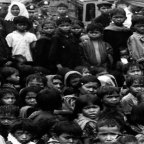
The point of this article is not to argue that bio-medicine has become a mechanism for establishing political or … Continue reading Transforming Refugees

This article presents a brief discussion about the importance of traditional cultural and family values in urbanized, industrialized societies. In … Continue reading Traditional Family Values in Urbanized Societies

Although there is considerable literature on conditions of unemployment and poverty in many modernized countries, there is a penuriously small … Continue reading Unemployment & Poverty in Brazil

There are many holidays celebrated in the city of Salvador, Bahia, Brazil. And on almost every occasion, you can see … Continue reading The Art of Capoeira
Some of you may be interested in knowing that Perspectives in Anthropology will be featuring a series of online anthropology … Continue reading Documentary Series

Contemporary American religious life is experiencing a very profound crisis. On one hand, this crisis is characterized by a lack of clarity in vision, deficiency in discernment, and a tendency to fall back on personalistic and individualistic interpretations of moral law. On the other hand, politically and culturally radical forces attempt to eliminate spiritual depth by replacing it with concepts of consumerism, careerism, narcissism, and a new form of critical consciousness that undermines prevailing modes of social and moral ideal. Continue reading “Man’s Law and Moral Law: Same-sex Gender Politics in the US and the Relational Framework of Legislation”

